

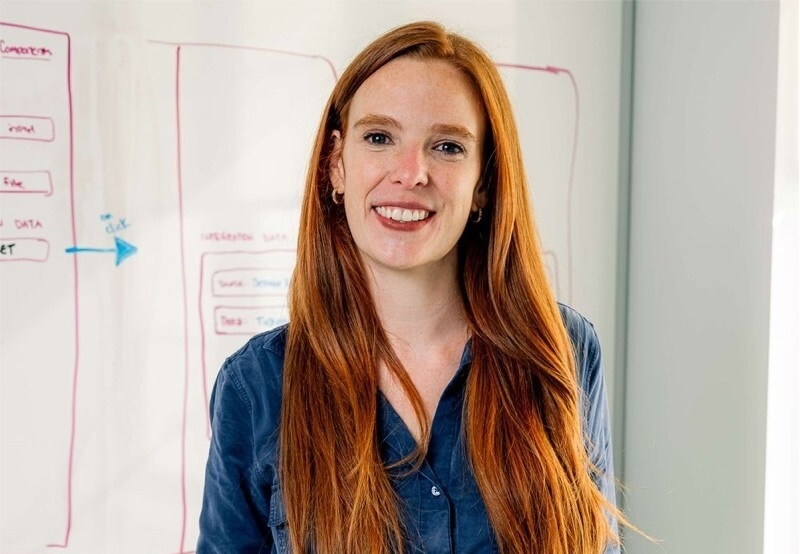
Sara Hooker, a computer scientist known for her work on machine learning at Google and Canadian A.I. startup Cohere, has spent the past few years doing her “tour of duty” across some of the A.I. industry’s most competitive frontier labs. Now, she’s striking out on her own—and taking a rebellious stance against the industry’s most ingrained principles. Hooker and her co-founder, Sudip Roy, have raised $50 million for their new startup, Adaption Labs, they announced yesterday (Feb. 4). The company is centered around the premise that efficient, self-learning training methods—not mass amounts of data and energy—will lead to the best models.
“Most of A.I. progress is: you build the biggest model, and then you ship the same model to billions of people around the world; no matter what language, what industry, what enterprise,” Hooker told Observer. “This is a radical departure from that.”
Her ambitious wager has grabbed the attention of Silicon Valley. The San Francisco-based startup’s round was led by Emergence Capital Partners, with participation from Mozilla Ventures, Fifty Years, Threshold Ventures, Alpha Intelligence Capital, e14 Fund and Neo. Adaption Labs declined to share details of its valuation.
Conventional wisdom in A.I. suggests that more compute leads to bigger and more capable models. But Adaption Labs believes that approach has hit a wall. “One of our core beliefs is that no frontier A.I. lab is going to quadruple the size of their model for the next year,” said Hooker. “That means all bets are off.”
Instead, Hooker is interested in experimenting with building models that can learn continuously and adapt to workloads in real time as they interact with different environments. User feedback, for example, should immediately change the behavior of A.I. tools instead of being “lost in a vacuum.” An emphasis on efficiency at Adaption Labs will also include exploring ideas like “gradient-free learning,” which looks for alternatives to traditional training methods that rely on optimization algorithms to adjust model parameters in an effort to minimize errors.
Hooker and Roy are poised to disrupt an industry that they have spent their careers advancing. Both worked for years at Google before moving on to Cohere, where Hooker acted as vice president of research, and Roy served as senior director of inference. Despite departing Cohere last year, Hooker said she is “proud” of the work she did, which included a focus on multilingual model development. But Adaption Labs’ goals of enabling adaptive data, intelligence and interfaces wouldn’t be achievable within a traditional frontier lab, she said, due to those areas being split across different teams. “It’s much easier to start with that urgency of putting them all on the same pillar from the beginning,” she said.
Adaption Labs isn’t alone in going against the grain. A growing chorus of voices in Silicon Valley has begun to question the industry’s dominant assumptions. Yann LeCun, who recently left Meta to launch AMI Labs, has raised doubts about traditional scaling law principles; so has David Silver, a former Google DeepMind researcher whose startup, Ineffable Intelligence, focuses on training self-learning models through experience rather than feeding them data.
Hooker’s fresh funding is primarily earmarked for building out a team. Adaption Labs is currently hiring for 10 roles, some of which can be based in global locations such as Turkey, Mexico and Brazil. Staffers are also offered a distinctive perk: an “Adaptive Passport” that allows them to take an annual trip to a country they’ve never visited before. “We want to encourage people to not only explore, but we want to represent that we’re a global technology company from day one,” said Hooker. Roy was the first to take advantage of the benefit, using it for a trip to Costa Rica last year.
Hooker expects that a reckoning of traditional scaling laws as major A.I. developers confront the reality that ever-greater computing power is yielding diminishing returns. Algorithmic innovation will be the real driver of progress. “This is the year in which it will really matter,” she said.


