

While contemporary Caribbean artists—particularly those working within the diaspora—are beginning to receive greater commercial and institutional attention internationally, much of what is unfolding in the region’s local scenes remains disconnected from the global art world. The newly launched nomadic gallery Heliconia Project aims to support and connect these ecosystems of artists, collectors and art professionals, not only in the Dominican Republic but throughout the Caribbean. Its goal is to build global pathways for Dominican and Caribbean art while cultivating local arts scenes capable of sustaining themselves over the long term.
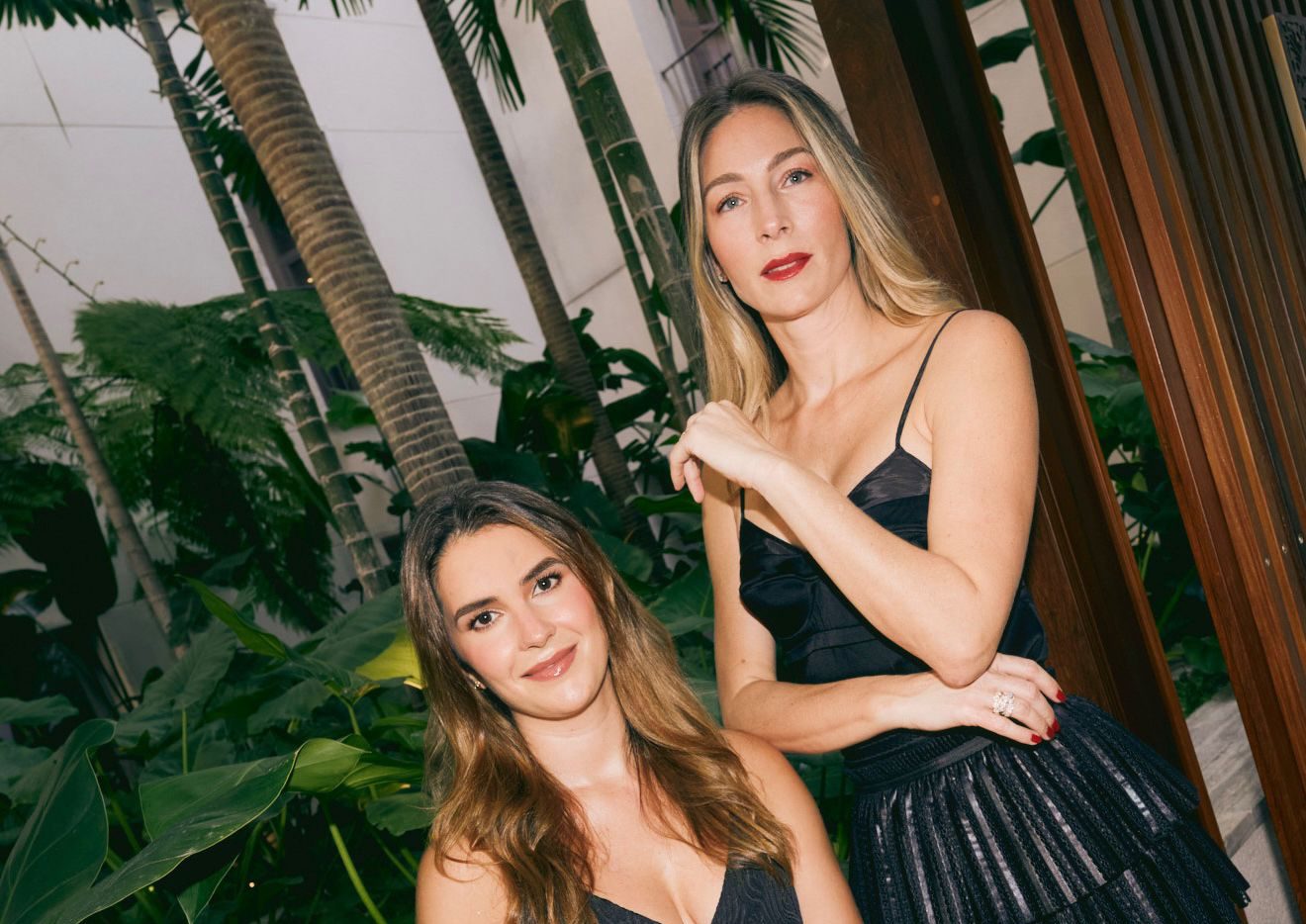
At the helm are two Venezuelan-born art professionals, patrons and collectors, Elsa Maldonado and Nicole Bainov, who, after relocating to the Dominican Republic, saw this gap and felt compelled to act. Drawing on their experience in the international art world, they created a platform grounded in the specificities of the local context, its histories and its communities.
Maldonado comes from a long line of established collectors and art philanthropists, while Bainov brings over a decade of experience working across major art institutions and blue-chip contemporary galleries in London, as well as her early engagement with collecting. Together, they envisioned Heliconia Project as a flexible, context-driven model that amplifies Caribbean voices through international business standards while remaining attuned and specifically responsive to the region’s cultural and social realities.
“We felt that we could do something—at least provide a bit of cultural presence, with our international experience,” they told Observer. What began as a one-off show soon evolved into a professional gallery—one of the few currently active in the Dominican Republic and, most importantly, one spotlighting Caribbean talent on international platforms.

The Dominican Republic has experienced rapid economic growth in recent years, driven largely by tourism. In 2025 alone, the country recorded a historic 11.6 million visitors, the highest number of arrivals in its history and a sign of sustained expansion rather than a simple post-pandemic rebound. At the same time, the Dominican Republic has attracted a growing international population, becoming a destination for retirees, remote workers and long-term foreign residents, particularly from North America and Europe. Most expatriates today are concentrated in Santo Domingo, Punta Cana, Samaná and Las Terrenas.
Maldonado and Bainov see the potential of this expanding audience to support local artists. “There’s a small handful of collectors—some of them sit on boards like the Reina Sofía or even the Latin American board of the Guggenheim—and they do try to invest in local art, support projects and donate to museums,” they noted. “The issue is that there simply aren’t that many people supporting local artists consistently.” Heliconia was born from this desire to cultivate a community that could do so while encouraging greater engagement from the international art world with contemporary Caribbean practices.
The Dominican Republic’s leading modern and contemporary art institution, Museo de Arte Moderno in Santo Domingo, is located in the Plaza de la Cultura Juan Pablo Duarte. While its programming has strengthened in recent years, Maldonado and Bainov said that many efforts to develop the local art ecosystem remain driven by private initiatives. Two key institutions in this regard are Centro León, a major private museum and cultural center in Santiago de los Caballeros, and Museo Bellapart, an essential reference point for Dominican modern art in Santo Domingo.
Even with these institutions, there are few platforms for local artists, particularly those in the early stages of their careers when first exposure and sustained encouragement are critical. Heliconia provides that space while also offering the curatorial rigor needed to properly contextualize and elevate these practices. “We’re very institutionally aligned. We want to get our artists into institutions and give them museum-quality shows. That’s the priority,” they emphasized.

Heliconia Projects intentionally chose a nomadic format that could respond to the distinct profiles and behaviors of the island’s communities and support the creation of site-specific projects. By reactivating historical locations and engaging with the colonial or identitarian memories they carry, the gallery uses these spaces to prompt new conversations or turn inherited narratives on their head. “The island itself has different centers—Santo Domingo, Santiago and then areas that are growing quickly, largely because of international residents coming in,” Bainov said, pointing to an established international community with many people in finance.
“The question for us became: how do we speak to all these people who don’t think of the Dominican Republic as a place to buy art, only as a place to vacation? Going nomadic helps us avoid saturating a small market by producing too many exhibitions in one location. People don’t have the financial capacity to support a constant schedule, and fatigue sets in fast,” Maldonado explained. “Instead of waiting for collectors to come to us, we go to them—without compromising the curatorial integrity,” Bainov added. This approach allows them to create more context-specific, memorable presentations that often interact with the architecture and the island’s layered history. “Wherever we do a show, the space is part of the curation. If we had only one fixed space, we’d lose that.”
Heliconia Projects recently opened a new exhibition at Casa de Campo to support the community, with proceeds benefiting a foundation that aids children in an impoverished area. “For us, it’s a way to give back to the country where we live, while nurturing the local art scene,” they said. Titled “WHERE MEMORY TAKES SHAPE,” the show features a roster of both international and regional artists—including Emiliana Henriquez, Mahsa Tehrani, Adelisa Selimbasic, Natia Lemay and Emily Pope—who explore how the human figure has served as a site where memory accumulates gradually and unevenly, often beyond the reach of language.
When programming on the island, they often present international Latino artists to foster dialogue and exchange. “That’s how we gain validation with the community,” they said. Conversely, when they mount exhibitions abroad or participate in fairs, they prioritize including at least one or two Dominican artists. “The long-term goal is to help Dominican artists build careers beyond the Caribbean and Latin America—to enter stronger collections and institutions.”

Another goal is bringing renewed attention to Dominican artists who may have been overlooked internationally, even if they are already recognized within the country’s institutional landscape. One such artist is Fernando Varela, who has had major retrospectives in the Dominican Republic and in Puerto Rico—but not beyond the region. When Heliconia Projects showed his work at NADA Villa Warsaw, they succeeded in placing it at MS1 in Łódź, the first modern art museum in the world. “They have a strong focus on constructivist artists—figures like Joaquín Torres-García from Uruguay—and Fernando fits into that discourse. They recognized him as part of that modernist lineage,” Bainov pointed out.
When it comes to emerging talent, Maldonado and Bainov are closely following young artists, though they acknowledge that, in the absence of a functioning ecosystem, one of the greatest challenges is convincing younger creatives that pursuing art is a viable career pathway. Many promising people eventually give up and take day jobs out of necessity.
And because opportunities to study art and to travel for education are still limited for many, Heliconia also prioritizes education and accessibility. “When we organize exhibitions, we try to make it clear that anyone can come, that these spaces are not closed or elite,” Bainov said. Communication is key in this effort, particularly through social media. “We use Instagram heavily. People often ask us whether there’s an entrance fee, and we tell them, no—bring your friends.”


