

This article is part of Upstream, The Daily Wire’s new home for culture and lifestyle. Real human insight and human stories — from our featured writers to you.
***
We have four kids, and sometimes when my husband and I are making dinner, the homework is done, and the siblings aren’t playing well together, we need TV time to hold their attention for a bit. The shows we choose are important — not just because we care about the messages our children are seeing and receiving, but because we care about their ability to be able to sit and engage in “longer-form” entertainment.
Research backs this up. “Children who watched the fast-paced television cartoon performed significantly worse on the executive function tasks than children in the other 2 groups when controlling for child attention, age, and television exposure,” a study from 2011 found. Even nine minutes of exposure damaged the executive functions (emotion, behavior, and thought processing to achieve goals) of four-year-olds.
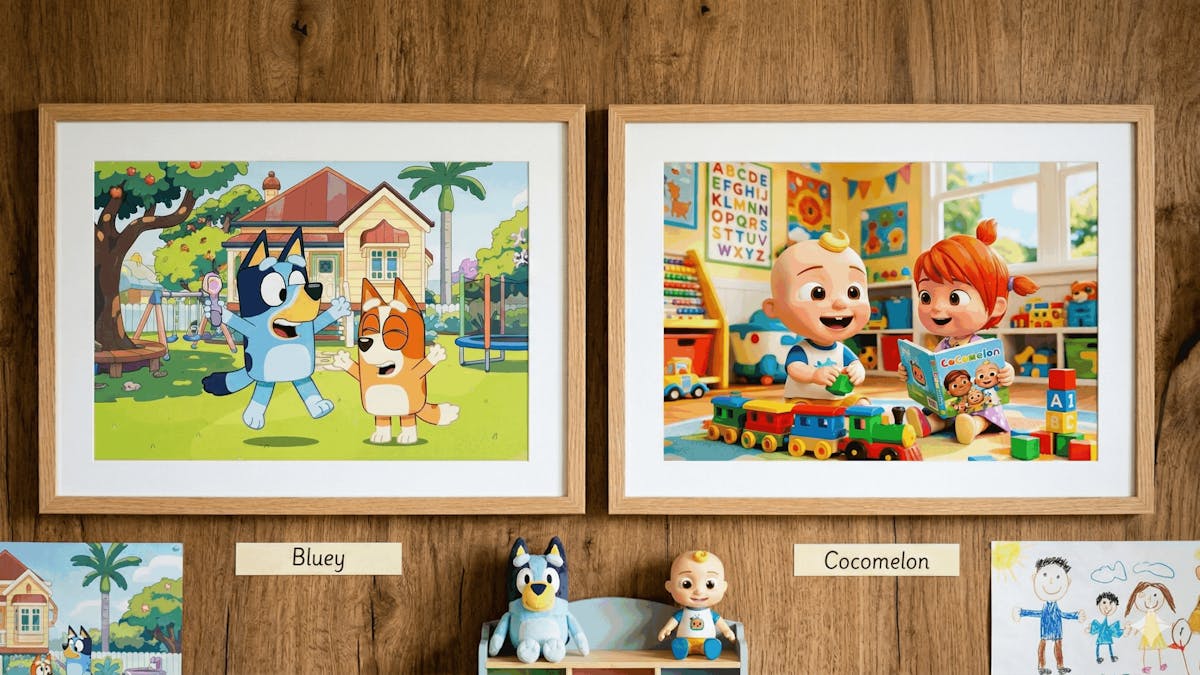
Our toddler has a speech delay and has an incredible therapist who works with him during sessions in our home. Speech pathologists have told me since he started his therapy over a year ago that, among kids’ shows, “Cocomelon” is the worst, and “Bluey” is the best. I agree. The frame rates of the shows matter, and “Cocomelon” is literally created to keep a toddler staring as it hops from frame to frame. There’s no beginning, middle, or end. It’s non-stop music, colors, and people. Compare this to “Bluey,” which develops story and characters for young viewers to root for and get to know.
“Cocomelon” is all music-based, which many parents might think is innocent enough because we have been told that music for kids is great. But, as the nursery songs are being sung by the main characters, there are often rapid and disjointed scene changes. (Not to mention the show encourages gender “fluidity.”)
“Bluey,” on the other hand, has a cohesive flow and plot lines featuring recurring characters such as Bluey’s sister, Bingo; a mom and a dad; and other extended family. The episodes of Bluey also have names that correlate with the plots of the 7- to 9-minute stories. “Cocomelon” is nonstop for over an hour per episode.
One director of a speech center for kids and adults told me, “Cocomelon is too fast-paced and does not allow the child to engage. They’re just blank staring at a screen.” She added that the show requires no patience, contains no storyline, and builds no anticipation. Therefore, there’s no reward.
A writer at the Atlantic recently raised the alarm about film students who can no longer sit through a feature film. College students are now being assigned only clips and scenes from major motion pictures that professors deem influential. We can blame the smaller screens; professors often saw students looking at their phones in pivotal scenes of classic films. How is the next generation going to create art if they can’t sit through a two-hour movie with classmates?
The piece also noted that students prefer to stream movies in their dorms instead of attending a screening in a group. But watching television as a group is vital. Watching “Bluey” as a family, we get to see everyone’s reactions to it. Our toddler’s reaction to “Home Alone” over Christmas brought us all joy. A toddler laughing at certain spots of slapstick comedy during a film, the rest of us know scene by scene, is so cute; it gave us a glimpse into his awareness and personality. Seeing something through children’s eyes is amazing. I can guarantee you our family would not be sitting down together to watch “Cocomelon.”
We are such big “Bluey” fans that our 12-year-old created a spreadsheet with each episode to monitor everyone’s favorite and average out the “best” one. From Season 1, “The Pool” is a favorite “because it reminds us of going places and mommy has everything and daddy says we don’t need anything until we get home,” she says. In the episode, Dad and Bluey make fun of Mom because she is always over-packing, only to realize they miss the sunscreen and floaties when no one remembers to bring them.
The “Camping” episode is adorable and realistically bittersweet, showing how sometimes we make friends just for a little while, but we can all find something in common, even with a language barrier.
The “Onesie” episode alludes to an aunt’s infertility and desire to have a baby. It teaches kids that sometimes we want things we cannot have, and when we have loved ones going through such an experience, we need to be there for them and acknowledge that it might be hard for them to engage when they’re reminded of that pain.
A show with community, consistency, and a mom and a dad is pretty “conservative” these days. But honestly, it’s just real life. Moms needing an occasional break (see the “Sheepdog” episode) and the requirements of hosting and serving others (the “BBQ” episode) resonate with people of all ages.
For such short episodes, they contain all the elements of a good story: a beginning, middle, and end with good pacing and good morals. Compare that to the quick-moving images and lack of direction that can bookend long “Cocomelon” episodes.
I can kind of relate to those film students; sometimes, some movies are “slow.” But the art of storytelling cannot be limited to TikTok videos and YouTube shorts. Attention spans need to last in order to engage in real life — at work, at school, in relationships, in friendships, and with a spouse and your kids.
As many parents saw during the pandemic, the shows your kids watch can even affect their communication and behavior. Some parents swore in early 2021 that their youngsters were talking with British accents because of watching so much “Peppa Pig.” Honestly, I’m fine if my kids start talking like “Bluey.” Australians say “no” in a humorous way and never sound mad. If they’re going to imitate anyone, it might as well be a beloved family of cattle dogs.
***
Elisha Krauss is a conservative commentator, writer, and speaker who resides in Los Angeles, California, with her husband and their four children. She is an advocate for women’s rights, school choice, and smaller government.

