

Estimated reading time: 18 minutes
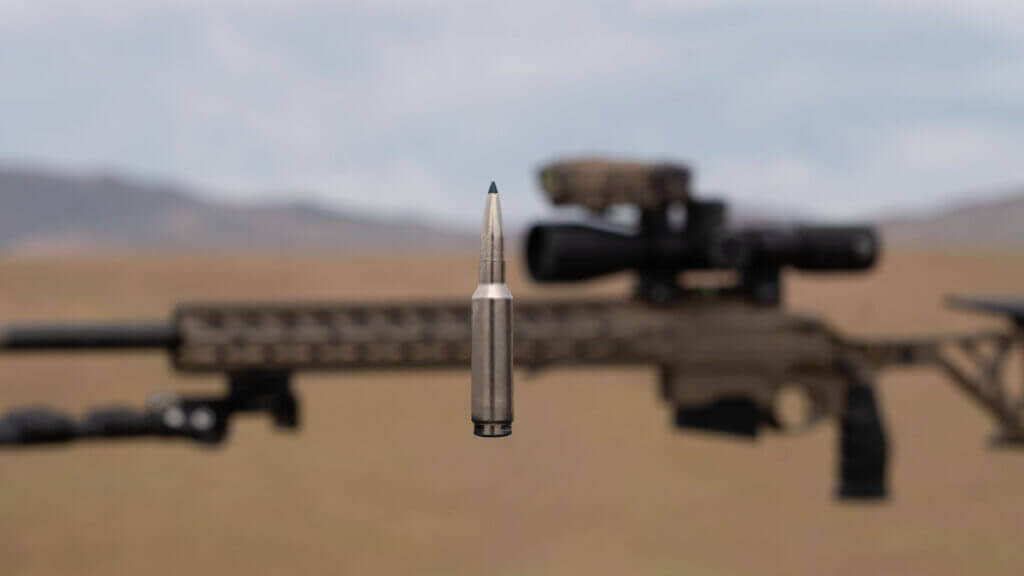
Federal’s 6.5 Creedmoor +Peak is not another new cartridge begging you to buy another rifle. It is a high-pressure Peak Alloy load that pushed a 130-grain bullet past 3,100 fps and made the 6.5 PRC obsolete.
For years, the answer to one question has driven cartridge development:
What if my 6.5 Creedmoor was faster?
The industry answered that question with cartridges like the 6.5 PRC. If you wanted more velocity, more energy, and more effective range, the conventional wisdom was simple: buy a bigger cartridge and a new rifle to chamber it.
Federal thinks there may be a better way, and this one does not start with buying another rifle.
The company’s new 6.5 Creedmoor +Peak ammunition uses the same Peak Alloy case technology first introduced with the 7mm Backcountry, but instead of requiring shooters to invest in an entirely new platform, Federal has applied the technology to one of the most popular rifle cartridges ever created.
The result is a factory-loaded 6.5 Creedmoor operating at approximately 80,000 psi and producing velocities that rival or exceed 6.5 PRC performance, all while fitting rifles many shooters already own.
Those are bold claims.
After spending time behind the rifle, running the ammunition across a chronograph, and shooting targets beyond 1,000 yards, I’m convinced this is one of the most significant ammunition introductions I’ve seen in years.
Not because it’s a new cartridge.
Because it isn’t.
Watch The Federal 6.5 Creedmoor +Peak Test
Watch our full video testing the 6.5 Creedmoor +Peak to see the chronograph numbers, downrange impacts, and rifle setup behind the results.
The 6.5 Creedmoor Problem Federal Just Attacked

The 6.5 Creedmoor became America’s darling for good reason.
It is accurate, efficient, relatively mild recoiling, easy to shoot well, modern in design, works with heavy high-B.C. projectiles, and is available in virtually every rifle platform imaginable. From lightweight hunting rifles to precision competition guns, the 6.5 Creedmoor has dominated the market since its introduction.
But it has always had one limitation.
Velocity.
At some point, physics catches up with every cartridge. Even with excellent bullets and impressive ballistic coefficients, there is only so much performance available from a conventional brass-cased 6.5 Creedmoor operating at standard pressures.
That’s where cartridges like the 6.5 PRC came from. Shooters wanted more speed, more energy, flatter trajectories, and better wind performance. The tradeoff was buying a new rifle chambered for a different cartridge.
Federal’s new approach attacks the problem from an entirely different direction.
Instead of increasing case capacity, they increased allowable pressure.
A lot.
Peak Alloy Is The Trick Behind This Hot 6.5 Creedmoor

The most important thing about 6.5 Creedmoor +Peak is not the bullet.
It’s not the powder.
It’s not even the cartridge itself.
It’s the case.
Peak Alloy technology replaces conventional brass with a proprietary high-strength steel alloy case that is nickel-plated for corrosion resistance and lubricity. According to Federal, this allows chamber pressures exceeding 80,000 psi, compared to approximately 65,000 psi for conventional 6.5 Creedmoor ammunition.

Federal describes the material as a proprietary steel made with a proprietary process, with strength closer to the alloys used in safes and high-pressure industrial applications than to conventional cartridge brass. Because the case is so much stronger, it carries more of the chamber pressure itself and takes the load off the bolt face. It is also a one-piece design, which matters once you look at how the rest of the industry is approaching high pressure.
That extra pressure is not trivial. It turns directly into speed.
Federal claims approximately 300 feet per second more velocity than conventional 6.5 Creedmoor loads and roughly 100 feet per second more than comparable 6.5 PRC ammunition.
Those numbers sounded ambitious when I first heard them.
Then I started shooting, and the chronograph stopped sounding like marketing.
Federal 6.5 Creedmoor +Peak Quick Specs
| Cartridge | 6.5 Creedmoor +Peak |
|---|---|
| Case Technology | Peak Alloy |
| Case Material | Proprietary high-strength steel alloy, nickel plated |
| Operating Pressure | Approximately 80,000 psi |
| Conventional 6.5 Creedmoor Pressure Reference | Approximately 65,000 psi |
| Tested Load | 130-grain Terminal Ascent |
| Test Barrel | 24-inch barrel |
| Observed Video Test Average | 3,105 fps |
| Earlier Pre-Production Test Average | 3,118 feet per second |
| Expected Dealer Availability | August 2026 |
Yes, Federal 6.5 Creedmoor +Peak Is Reloadable
Whenever shooters hear “steel case,” they immediately think of inexpensive imported ammunition, non-reloadable cases, and piles of spent cartridges headed for the scrap bucket.
Peak Alloy is different.
Federal says 6.5 Creedmoor +Peak cases are fully reloadable, and the company plans to offer unprimed Peak Alloy cases for handloaders who want to develop their own loads.
In fact, several of my friends have already been handloading the Federal 6.5 Creedmoor +Peak.
The reloadability aspect may prove nearly as important as the velocity gains.
Many of the shooters most likely to appreciate the benefits of 6.5 Creedmoor +Peak are exactly the kind of people who spend evenings at the reloading bench. Long-range competitors, western hunters, and precision rifle enthusiasts typically want to tailor loads to their specific rifles. Federal appears to understand that.
Another interesting characteristic of Peak Alloy is that the cases reportedly do not stretch the same way traditional brass does. Federal says the material exhibits significantly less case growth, which should reduce the frequency of trimming during the reloading process.
Obviously, the handloading community will ultimately determine how well the cases perform after multiple firings. Questions regarding case life, primer pocket longevity, sizing requirements, and optimal load development are still waiting to be answered.
But the fact that the cases are reloadable at all is a significant advantage.
Had Federal introduced a revolutionary new case technology that couldn’t be reloaded, many serious shooters would have dismissed it immediately.
Instead, the company appears to be giving handloaders an opportunity to participate in the technology rather than merely consume it.
Chronograph Results: Federal +Peak Hits 3,105 FPS
The first lot of pre-production 130-grain Terminal Ascent ammunition I tested at Hat Creek about a month ago averaged 3,118 feet per second from a 24-inch barrel and over approximately 100 rounds.
For reference, many conventional 130-grain-class 6.5 Creedmoor hunting loads live somewhere in the 2,700 to 2,850 fps range, depending on bullet weight and barrel length.
During our video test session, a second lot of the same +Peak ammunition averaged 3,105 fps. All velocity testing was done with a Garmin Xero C2. To put those numbers in context, we also tested several conventional 6.5 Creedmoor loads through the same rifle.

A Browning 129-grain load averaged approximately 2,895 fps.
Hornady’s 129-grain load averaged 2,762 fps.
Norma’s 130-grain load averaged 2,766 fps.
A custom 135-grain A-Tip load averaged approximately 2,740 fps.
Even Hornady’s lighter 120-grain ELD-M load averaged 2,887 fps.
The Federal +Peak ammunition was launching a 130-grain bonded hunting bullet roughly 200 to 360 feet per second faster than the ammunition we had on hand for comparison. That’s not a small difference. That’s an entirely different performance class.
| Load | Velocity | Difference | Approx. Muzzle Energy |
|---|---|---|---|
| Federal +Peak 130gr | 3,105 fps | Baseline | 2,782 ft-lbs |
| Browning 129gr | 2,895 fps | -210 fps | 2,401 ft-lbs |
| Hornady 129gr | 2,762 fps | -343 fps | 2,186 ft-lbs |
| Norma 130gr | 2,766 fps | -339 fps | 2,208 ft-lbs |
| Custom Hornady 135gr A-Tip | 2,740 fps | -365 fps | 2,250 ft-lbs |
What 3,105 FPS Means Past 1,000 Yards
Extra velocity means less drop, less wind drift, shorter flight times, and more retained energy at distance. Those benefits become increasingly obvious as the range increases. After confirming the velocity data and checking the zero, we started stretching the rifle’s legs.
The first target sat at approximately 475 yards.
First-round impact.
The next target was roughly 655 yards.
First-round impact.
The final target sat just beyond 1,000 yards.
First-round impact again. At that point, the velocity numbers stopped being theoretical.
But one thing I noticed throughout the day was how quickly the bullet arrived. The flight time simply felt different. Targets started swinging noticeably sooner than I expected from conventional Creedmoor loads.
Accuracy Looks Promising, But Production Ammo Gets The Final Word

One important caveat is that Federal specifically told me the ammunition I received was not yet representative of final production accuracy standards.
The company was confident enough to let us chronograph and test it, but they also made it clear that production ammunition should perform better than what I had in hand.
Even so, the results were encouraging.
The reality is, I didn’t have enough ammunition to use chasing groups, and that’s not really the point of this story anyway. The important takeaway is that the ammunition demonstrated sufficient accuracy potential to warrant further testing once production loads become available.
Will Federal +Peak Run In Your 6.5 Creedmoor Rifle?
Federal states that 6.5 Creedmoor +Peak has been tested in a wide variety of existing 6.5 Creedmoor firearms and is compatible with many current platforms, including bolt actions, lever actions, single shots, and semi-autos. The company also advises shooters to consult their firearm manufacturers regarding compatibility with high-pressure ammunition.

Federal specifically does not recommend +Peak in the CVA Scout. No special barrel twist is required either. Every +Peak bullet weight is designed to work with the rifling in existing 6.5 Creedmoor barrels.
During our testing, we ran the ammunition through a prototype Seekins SIC rifle designed for high-pressure applications and later through a 6.5 Creedmoor AR-10. All of Seekins’ current rifles are rated for high-pressure ammunition.
The AR-10 functioned normally. Feeding was normal. Extraction was normal. The bolt locked open as expected.

However, during testing, with the SIC rifle, we did experience one cartridge that would not fully chamber. Everything else ran flawlessly, but one round appeared to be slightly out of specification and would not allow the bolt to close completely. Considering this was pre-production ammunition, that’s worth noting but not particularly alarming. The rest of the ammunition performed without any issues.
One practical note worth passing along. Make sure your chamber is clean and dry before shooting. Lubing a rifle for storage is good practice, but running any ammunition, Peak Alloy included, through a heavily lubed chamber can damage a rifle.
Why Federal Is Not Doing This With .270 or 30-06
If this technology is so good, why isn’t Federal applying it to old standbys like the 270 Winchester or the 30-06 Springfield?
Safety.
Those cartridges have been in production for a very long time, and there are millions of old rifles chambered for them. Many were built to pressure standards from a very different era. Introduce a high-pressure version of a cartridge like that, and sooner or later, one of those rounds ends up in a rifle that was never designed to contain it. That is a dangerous outcome, and avoiding it is the responsible call.
The 6.5 Creedmoor is a different situation. It is a modern cartridge, barely 15 years old, so the entire population of rifles chambered for it is relatively modern and built with current manufacturing. Those rifles generally carry a meaningful proof margin above standard pressure.

My test rifle is an extreme example. Seekins proves well beyond 100,000 psi, far past anything required. In fact, they recently discontinued all their rifles and reintroduced new rifles that were designed around high-pressure cartridges, along with other improvements. Pair a modern action like that with a steel case that carries much of the pressure, and you have a system built end to end for the load. That combination simply does not exist across a population of vintage deer rifles, which is exactly why +Peak lives in modern chamberings.
Federal 6.5 Creedmoor +Peak Loads And August 2026 Availability
Federal plans to launch 6.5 Creedmoor +Peak in August 2026 with five initial loads that cover everything from long-range hunting to precision competition shooting.
The lineup includes:
- 130-grain Terminal Ascent: A bonded hunting bullet designed for deep penetration and controlled expansion. This is the load I tested extensively and the one that averaged just over 3,100 fps during my evaluation.
- 127-grain Barnes LRX: An all-copper hunting bullet intended for hunters who prefer lead-free projectiles while maintaining excellent weight retention and penetration.
- 156-grain Berger Elite Hunter: A high-ballistic-coefficient hunting bullet aimed squarely at long-range hunters who want maximum retained energy and minimal wind drift.
- 155-grain Fusion Tipped: A bonded hunting bullet designed to combine reliable expansion with deep penetration on larger game.
- 153-grain Sierra Tipped MatchKing: A precision-focused match bullet intended for shooters pushing the limits of distance and ballistic performance.
Federal has not yet released complete velocity specifications for all five loads, but based on company claims and what I observed with the 130-grain Terminal Ascent ammunition, some of the heavier 153- to 156-grain offerings could prove especially interesting. If Federal can push those heavy-for-caliber bullets near the 2,900 fps mark, long-range shooters are going to pay attention.
Pricing is easier to swallow than you might expect. Federal says +Peak will be priced similarly to standard 6.5 Creedmoor of the same bullet type, only a couple of dollars more than a comparable box of standard-pressure 130-grain Terminal Ascent. You are not paying a steep premium for the case technology.
The company currently expects 6.5 Creedmoor +Peak ammunition to begin reaching dealers in August 2026.
Recoil and Barrel Life: The Two Big +Peak Questions
Whenever shooters hear “80,000 psi,” they immediately assume recoil is going to increase dramatically. That wasn’t my experience. Federal claims the perceived recoil is similar to conventional 6.5 Creedmoor ammunition, and after shooting quite a bit of it, I tend to agree. If there is a difference, it certainly wasn’t obvious. It makes sense when you think about it. The case is the same size, the bullet is the same weight, and the powder charge is similar. You are mostly just adding velocity.
The next concern is barrel life.
Again, Federal’s position is that internal testing has shown wear comparable to conventional 6.5 Creedmoor ammunition, though they recommend consulting individual firearm manufacturers for platform-specific guidance. Only time will tell whether independent shooters see similar results. For now, there simply aren’t enough rounds through enough rifles to draw definitive conclusions.
The Suppressor Advantage Could Be Huge For Hunters

One of the most interesting aspects of this technology may have nothing to do with maximum velocity. It may have everything to do with shorter barrels. Federal claims that a 20-inch barrel firing +Peak ammunition can produce velocities comparable to a 24-inch 6.5 PRC. If that proves true across a broad range of loads, it could be a major advantage for modern hunters.
There’s a reason it holds velocity in a short barrel. To reach 80,000 psi in a case this size, Federal has to use a relatively fast-burning powder, since a slow powder would take up too much room. A faster powder burns more completely in less barrel, so you give up less velocity when you cut the barrel down. A traditional magnum does the opposite. It leans on a long barrel to burn a slow, bulky powder charge.
Many hunters today are running suppressors.
Nobody enjoys carrying a 26-inch barrel with an 8-inch suppressor attached to the end. If shooters can maintain magnum-level performance from a shorter barrel, that changes the conversation entirely.
A compact suppressed hunting rifle becomes much more practical.
It is worth being clear that +Peak is not a suppressor-only round. Federal generated its published velocities through standard unsuppressed barrels, so the numbers on the box don’t depend on a can. If you do run a suppressor, check with the suppressor maker about high-pressure ammunition.
An unexpected side benefit is that the nickel-plated steel cases are magnetic, making cleanup at the range surprisingly easy for shooters who routinely collect their fired cases for reloading.
The Military Connection Behind Peak Alloy Pressure
The implications of Peak Alloy extend far beyond hunting rifles.
In late May, Federal announced an agreement with the U.S. Army that will allow the military to utilize Peak Alloy technology across multiple weapon systems and chamberings.
The agreement covers cartridges up to and including .50 caliber and requires delivery of 40 million Peak Alloy cases before certain government-use rights are granted. Federal also disclosed that multiple allied European nations are evaluating the technology.
That announcement matters because it demonstrates that Peak Alloy is not simply a hunting-market experiment. The U.S. Army clearly views this as a foundational ammunition technology.
Federal isn’t the only one chasing higher pressure, either. SIG’s hybrid-case 6.8mm load for the Army’s Next Generation Squad Weapon program already operates in the same 80,000 psi range. The difference is in the case. SIG uses a two-piece hybrid, a stainless steel base joined to a brass body. Peak Alloy is a single one-piece design. Two different routes to the same destination, and the destination is at a higher pressure.
Federal has also said additional +Peak cartridges in other bullet diameters are likely down the road. Between that and the Army agreement, this looks like the start of a platform, not a one-off.
Could Federal +Peak Put the 6.5 PRC On Notice?
That is probably the question most shooters will ask. The answer is: probably.
The 6.5 PRC isn’t going away tomorrow. There are too many rifles chambered for it and too many shooters invested in the cartridge. But Federal has created the first legitimate challenge to the PRC’s reason for existing. Historically, if you wanted substantially more performance than a 6.5 Creedmoor could provide, you bought a 6.5 PRC.
Now you can practice, plink, and shoot with cheaper brass loads in your existing 6.5 Creedmoor rifle, and when you go to hunt, shoot a match, or do anything where you would have reached for a 6.5 PRC, you can run +Peak in the same rifle you’ve been training on. No new rifle, no new optic, nothing else to buy, and you outperform the 6.5 PRC.
Final Thoughts: This Is Not Just Another Ammo Launch

I was critical and skeptical when Federal introduced the 7mm Backcountry. Not because I doubted the technology. I doubted whether shooters needed another 7mm cartridge in a long action that performed no better than, or even worse than, existing 7mm cartridges.
The 6.5 Creedmoor +Peak is completely different. Instead of asking shooters to buy another rifle, Federal has applied the same technology to a platform millions of Americans already own.
That’s a much smarter proposition.
There are still unanswered questions, and shooters won’t have to wait long to start answering them. Federal expects 6.5 Creedmoor +Peak ammunition to begin shipping in August, which means independent testing by hunters, competitors, reloaders, and content creators is right around the corner.
Long-term barrel life remains to be proven. Compatibility questions will need to be addressed by manufacturers. Production ammunition will need to demonstrate the consistency and accuracy that Federal believes it can achieve.
But after seeing 130-grain hunting bullets averaging more than 3,100 fps, watching steel ring at 1,000 yards, and comparing those numbers against conventional Creedmoor loads, one thing is clear:
This is not just another ammunition launch. It is a warning shot across the bow of the 6.5 PRC.
TELL US WHAT YOU THINK IN THE COMMENTS!

As the Editor-in-Chief of GunsAmerica, Hunt365, Decoding Darkness, and Suppressor Academy, True Pearce brings a rare blend of legal expertise, competitive shooting credentials, and deep hunting knowledge to the forefront of the firearms world. A former professional sponsored 3-Gun and Multigun competitor with multiple championships and titles, True’s shooting career began in long-range and tactical sniper matches—and he still burns powder in precision competitions, now branching into Hunter NRL.
A certified firearms instructor who has trained over 10,000 students face-to-face, True has also served on both sides of the courtroom as an attorney and currently as an elected Prosecuting Attorney. He has prosecuted and defended high-profile self-defense and firearms cases, giving him a unique, real-world perspective on the Second Amendment.
Outside the courtroom and off the range, True is a true western outdoorsman. A lifelong hunter and rancher, he rides and hunts off his own string of horses and pack animals, chasing elk, mule deer, wolves, coyotes, and anything else in season. He’s a longtime reloader, producing both precision rifle ammo and, back in the day, handloading over 40,000 rounds of 9mm and 5.56 annually for competition.
He’s also a thermal and night vision expert, known for his obsession with high-end optics, and is rarely found without a camera or a guitar nearby. Whether he’s glassing a distant ridge, reviewing cutting-edge gear, or deep in legal research, True brings passion, precision, and grit to everything he does.
Experience:
– Professional Shooter – Sponsored 3-Gun & Multigun competitor with multiple titles and a foundation in long-range and sniper/tactical matches.– Firearms Instructor – Certified instructor with over 10,000 students trained face-to-face.– Elected Prosecuting Attorney – Attorney with real-world experience defending and prosecuting self-defense and gun-related cases.– Hunter & Rancher – Horseback hunter with a working ranch, passionate about elk, deer, predator, and backcountry hunting.– Reloading & Ballistics Expert – Precision reloader and former high-volume competition handloader.– Optics Authority – Known for his deep knowledge and unrelenting standards in optics, thermal, and night vision gear.– Outdoor Creative – Avid photographer, guitar player, and outdoorsman with a sharp eye for gear and storytelling.– 2A Advocate – Committed to protecting the Second Amendment and educating Americans about their rights and responsibilities.

