

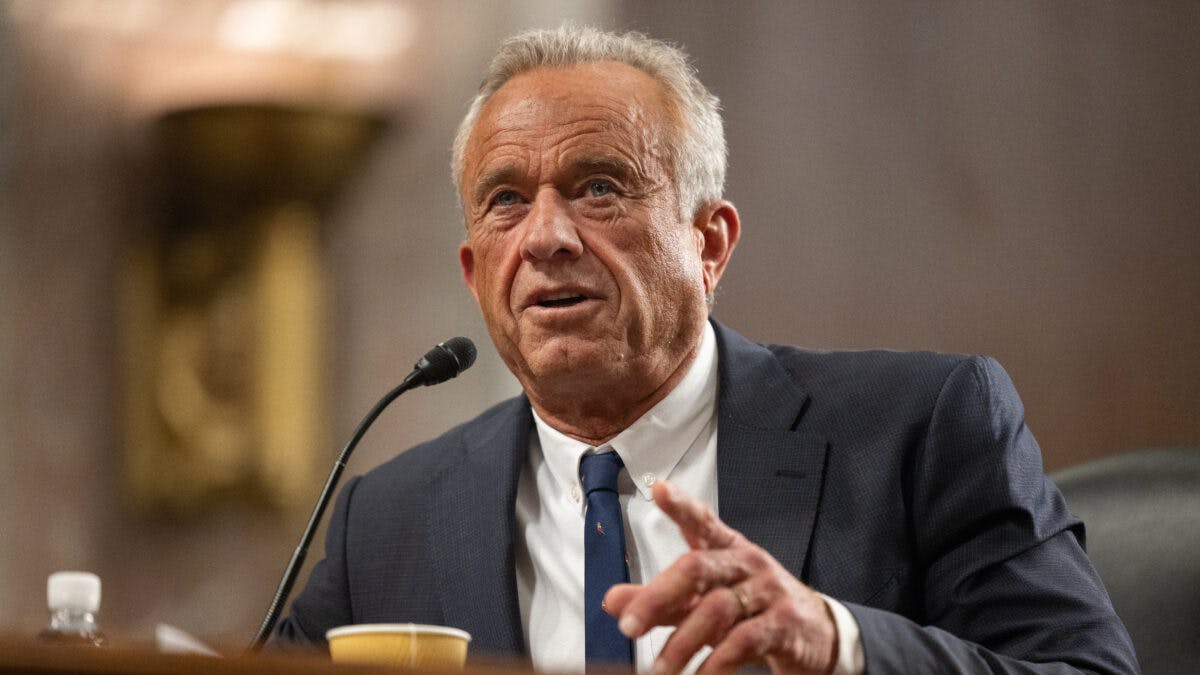
Robert F. Kennedy Jr. is throwing his weight behind a bipartisan push to overhaul how the United States detects emerging health threats, backing legislation to expand wastewater surveillance and build a national early-warning system for infectious diseases.
Appearing before lawmakers on the Senate Finance committee on Wednesday, Kennedy made clear the issue is a priority for him, aligning himself with efforts led by Sen. Tim Scott (R-SC) and a cross-party group of senators.
“I absolutely will work with you on the PREDICT Act,” Kennedy said. “It’s something that’s very personally important to me to have more wastewater surveillance. And we are also putting $325 million in this budget into a new bio threat radar system that will integrate with the microbial surveillance at wastewater treatment [plants] to detect pathogens as soon as they emerge in our country and elsewhere in the world.”
The PREDICT Act is a bipartisan proposal introduced by Scott and Sen. Cory Booker (D-NJ), alongside a coalition that includes Sens. Maggie Hassan (D-NH), Ted Budd (R-NC), Roger Wicker (R-MS), and Angus King (I-MA), who caucuses with the Democrats. The bill would expand the nation’s ability to monitor wastewater for traces of viruses and bacteria, a method that gained traction during the COVID-19 pandemic and has since been used to track diseases such as influenza, RSV, and measles.
Scott, in a statement provided exclusively to The Daily Wire, emphasized the urgency of strengthening those capabilities.
“Today’s hearing at the Senate Finance Committee underscored the importance of strong coordination in addressing public health challenges and staying ahead of emerging threats,” Scott said. “I was proud to highlight the PREDICT Act, which I introduced to expand wastewater surveillance so we can identify outbreaks earlier and respond faster to protect our communities.”
Wastewater surveillance allows officials to detect pathogens shed by infected individuals, often before symptoms appear or testing catches up. That early signal can provide critical lead time for local health systems to respond, potentially slowing or preventing wider outbreaks.
Supporters argue the system offers both public health and economic benefits. Early detection can reduce the scale of outbreaks, limiting strain on hospitals and avoiding the kinds of sweeping disruptions seen during the pandemic. Estimates from public health experts suggest that such systems could deliver significant per-person savings during a future health crisis.
Recent events have underscored that urgency. A measles outbreak in South Carolina has been cited by Scott and others as an example of why earlier detection tools matter, pointing to the need for faster, more proactive responses.
The PREDICT Act would direct the Centers for Disease Control and Prevention to fund and coordinate a national network of wastewater monitoring programs, working with state and local health departments, universities, and private partners. It also calls for expanded lab capabilities to identify new pathogens and track multiple threats simultaneously, along with the creation of a national data dashboard to improve transparency and coordination.
Kennedy’s endorsement adds another layer to the effort, particularly as he signals broader ambitions to reshape how the federal government approaches prevention. In the same set of remarks, he indicated plans to reform the U.S. Preventive Services Task Force, including bringing in new experts and increasing the frequency of its meetings.
“I know I have not done a good job of getting the meetings out there. We are going to change that,” Kennedy said, adding that existing standards for evaluating preventive care would remain intact.
The convergence of legislative and administrative efforts signals a push toward a more proactive model of public health, one focused on identifying threats before they escalate.
The PREDICT Act remains under consideration, but with bipartisan backing and support from figures like Kennedy and Scott, momentum is building toward a more coordinated, forward-looking approach to public health preparedness.

