

Two foreign nationals employed by the National Institutes of Health (NIH) were charged Tuesday with smuggling monkeypox into the United States and lying to federal law enforcement.
According to the U.S. Attorney’s Office for the Eastern District of Michigan, Vincent Munster, 53, a Dutch citizen and chief of the Virus Ecology Section at the NIH’s Rocky Mountain Laboratories in Montana, and Claude Kwe, 38, a Cameroonian national and NIH research fellow, were charged with conspiracy to smuggle monkeypox into the United States from the Republic of Congo and giving false statements to federal investigators.
Both men face a maximum sentence of five years in prison if convicted.
The two men worked at a Biosafety Level 4 laboratory, the highest level of biological containment used to study the world’s most dangerous pathogens.
Federal authorities claim the pair arrived at Detroit Metropolitan Airport on January 25 after traveling from Brazzaville, Republic of Congo, where a monkeypox outbreak was ongoing. Customs and Border Protection officers reportedly questioned the men after noticing they were transporting a large black plastic case.
According to investigators, Munster and Kwe told officers the case contained diagnostic and testing equipment. Authorities later determined the case allegedly contained 113 biological vials packed inside Styrofoam coolers.
Federal investigators said testing on 20 of the vials found that 17 contained deactivated monkeypox virus, one contained chickenpox virus, and two contained human DNA.
“These NIH experts apparently broke our laws by smuggling viral pathogens on a packed commercial airplane from an outbreak in the Republic of Congo. Let that sink in,” U.S. Attorney Jerome F. Gorgon Jr. said in a statement.
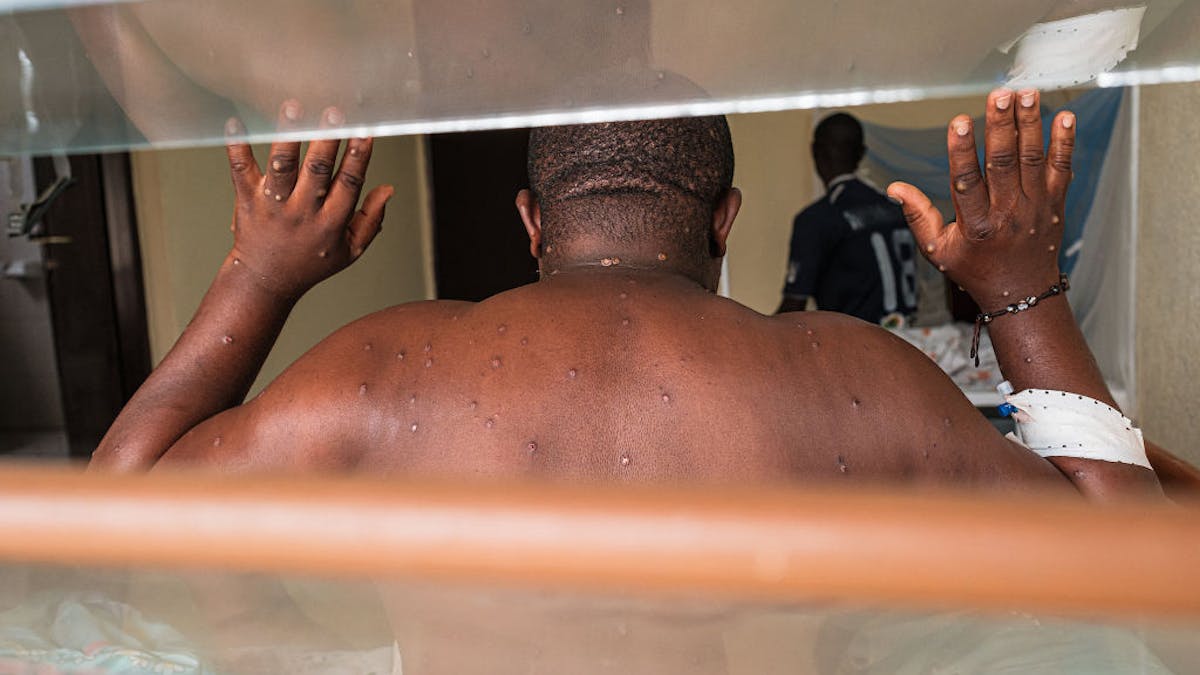
According to the Centers for Disease Control and Prevention, monkeypox is a viral disease that spreads primarily through close physical contact with infected people, animals, or contaminated materials. While most infected individuals recover, children, pregnant women, and people with weakened immune systems face a greater risk of severe illness. The CDC says the virus does not spread through casual contact or through the air in places like classrooms, offices, or pools.
Outbreaks of monkeypox have been ongoing in Central and Eastern Africa since late 2023. The CDC says the global clade IIb monkeypox outbreak that began in 2022 has resulted in more than 100,000 cases across 122 countries.
Since November 2024, the United States has recorded more than 20 laboratory-confirmed clade I monkeypox cases, according to the CDC. Officials say those infections involved travelers returning from affected regions in Africa or Europe, or individuals linked to recent travelers.
FBI Detroit Special Agent in Charge Jennifer Runyan said the allegations were “serious” and involved “dangerous and unlawful smuggling” along with attempts to mislead federal agents.
“No researchers should believe their positions, credentials, or professional status place them above the law,” Runyan added.
The Department of Health and Human Services Office of Inspector General also condemned the alleged conduct, warning that attempts to conceal biological materials could place the public at risk.
“We have zero tolerance for anyone who attempts to exploit our research frameworks, circumvent our border enforcement processes, or deceive investigators,” said CBP Director of Field Operations Marty C. Raybon.

