

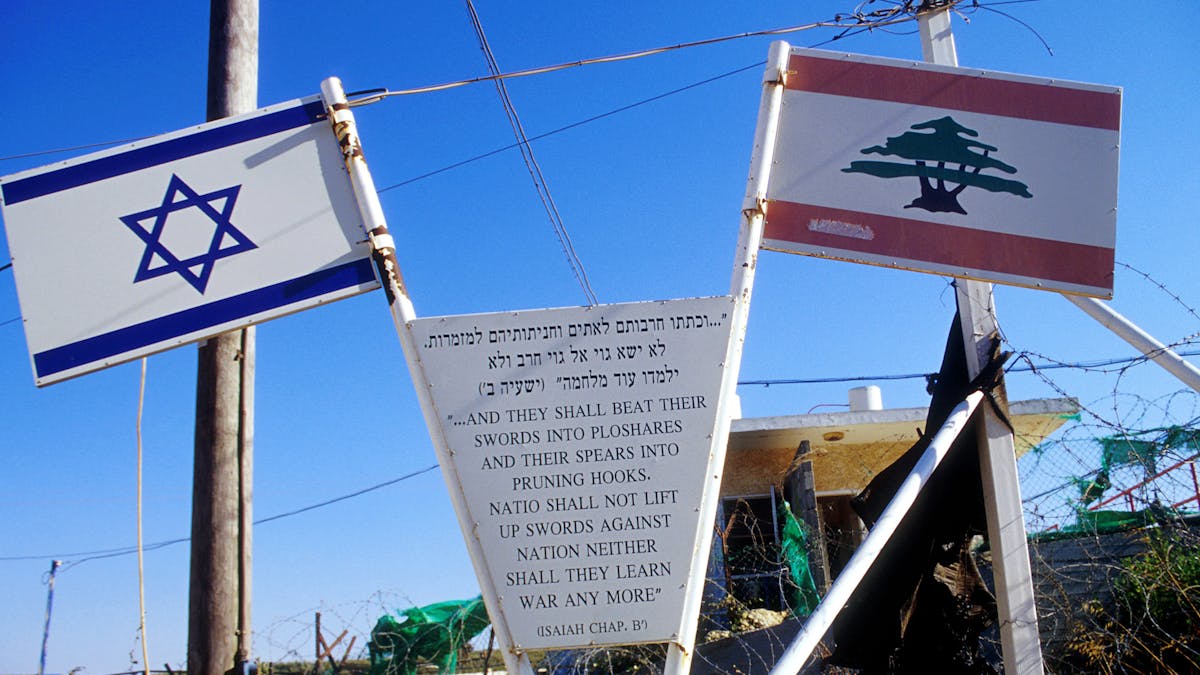
Diplomats from Israel and Lebanon are set to meet today for a second round of face-to-face negotiations, as both sides weigh whether a fragile ceasefire can be extended and potentially transformed into a longer-term framework for peace.
The meeting comes as tensions remain high, with Israeli officials accusing Hezbollah of repeatedly violating the ceasefire. A recent Israeli strike targeting what it said was a threat to troops reportedly resulted in journalist casualties.
The talks, hosted by Secretary of State Marco Rubio, will bring together senior U.S. and regional officials, including U.S. Ambassador to Israel Mike Huckabee, U.S. Ambassador to Lebanon Michel Issa, Counselor Michael Needham, Israeli Ambassador Yechiel Leiter, and Lebanese Ambassador Nada Hamadeh Moawad.
Lebanon is reportedly seeking a one-month extension of the current ceasefire.
The current agreement was announced by President Donald Trump as a 10-day pause that took effect at 5 p.m. ET on April 16, following calls with Lebanese President Joseph Aoun and Israeli Prime Minister Benjamin Netanyahu. It allows Israel to take self-defense measures while requiring Lebanon to prevent Hezbollah from “carrying out attacks, operations, or hostile activities against Israeli targets.”
While Lebanese authorities have long sought to disarm Hezbollah, the Iran-backed group remains one of the most powerful political and military forces in the country. At the same time, it has been significantly weakened since launching attacks on Israel in the aftermath of the October 7, 2023, assault. Israel’s response—an extensive air campaign and ground invasion—killed longtime leader Hassan Nasrallah and degraded much of the group’s operational capacity.
Trump has emphasized that the arrangement is separate from broader U.S. efforts involving Iran.
“This deal is in no way subject to Lebanon, either, but the USA will, separately, work with Lebanon, and deal with the Hezbollah situation in an appropriate manner,” Trump said last week. “Israel will not be bombing Lebanon any longer. They are PROHIBITED from doing so by the U.S.A. Enough is enough!!!”
Despite the diplomatic push, tensions on the ground remain high. Israel has accused Hezbollah of violating the ceasefire multiple times and recently conducted a strike against terrorists in vehicles it says approached Israeli troops “in a manner that posed an immediate threat to their safety.” In response, the Israeli air force struck one of the vehicles, and a structure the individuals fled into.
The strike reportedly also resulted in the death of journalist Amal Khalil, who worked for the pro-Hezbollah outlet Al Akhbar, according to Lebanon’s National News Agency. Another photojournalist was reportedly injured.
Lebanese Prime Minister Nawaf Salam condemned the incident, writing on X that “targeting journalists and obstructing the access of rescue teams to them, and then the renewed targeting of those teams after they’d arrived, constitute described war crimes.”
The Israeli military acknowledged that two journalists were injured in the strike, but denied deliberately targeting media personnel.
The first round of talks, held on April 14, was described by the State Department as “productive,” raising cautious optimism for continued diplomacy. U.S. officials have said a sustained agreement could unlock significant reconstruction assistance for Lebanon, help stabilize its economy, and expand regional investment opportunities.
Lebanese officials have stressed the importance of fully implementing the cessation of hostilities agreement, alongside addressing the country’s worsening humanitarian crisis. Israel has expressed a willingness “to engage in direct negotiations to resolve all outstanding issues and achieve a durable peace that will strengthen security, stability, and prosperity in the region.”
The negotiations mark the most significant high-level engagement between Israel and Lebanon since 1993 and are seen as a potential stepping stone toward formal diplomatic talks between the two countries.
On the ground, Israeli forces remain in southern Lebanon as part of efforts to push Hezbollah away from the border. Hezbollah, meanwhile, has refused to disarm unless Israel fully withdraws, though it has largely adhered to the ceasefire while publicly opposing the negotiations.
Controversy erupted in recent days after an Israeli soldier damaged a statue of Jesus in the southern Lebanese village of Debel, prompting swift condemnation and a formal response from the Israel Defense Forces.
In a statement on X, the IDF expressed “deep regret,” calling the act a “moral failure” that contradicts its core values. The soldier responsible, along with the individual who filmed the incident, has been removed from combat duty and sentenced to 30 days of military detention. Additional troops present have been called in for review, with the Chief of the General Staff stating the conduct “far exceeds any acceptable standard.”
The IDF replaced the statue in “full coordination” with the local Christian community.

