


Estimated reading time: 11 minutes
The Springfield Armory SA-16A2 is not just another retro AR15 trying to cash in on nostalgia. It is a smooth, iron-sighted 5.56 NATO rifle that reminds you why the M16A2 still deserves respect, range time, and a spot on your bucket list.
Why the Springfield Armory SA-16A2 Belongs on Your Bucket List
You can call the M16A2 a lot of things: retro, nostalgic, out of date. When I think about the M16A2 I think of the U.S. military’s last battle rifle. A rifle that evolved from jungle combat. A rifle in High Power competition that can tag a target at 200 to 600 yards if you do your part. It’s a rifle design that lasted from the mid-1980 to early 2000s. Pals my age remember the rifles fondly as a milestone in their lives. The Springfield Armory SA-16A2 brought back a lot of memories. My iron-sight shooting may be a tad rusty, but keeping them all in the black with this black rifle is something every rifle shooter should add to their bucket list. It’s not just a box to check and go on to the next. After shooting this rifle, you will want to run more. It’s just that type of rifle.
The M16A2 Is Old School, Not Outclassed
You might just yawn at the M16A2 as just another old rifle design. It helps if you know your history. There was a time when all AR15s looked like the M16A2. The era of the M16A2 was a certain generation’s battle rifle. It is our rifle, and I like to think of it as not old or dated, just not new anymore, because it is still a capable firearm.

Just like the M1 Garand, M1 Carbine, and M14, the M16A2, in the guise of the SA-16A2, is a piece of our military history. If you are familiar with more modern AR15 carbines, you will know the SA-16A2 intuitively. You’ll understand how modern M-LOK rails transformed the 16A2, making it easy to attach accessories. No duct tape or zip ties required on modern guns. What I like best about the 16A2 is the rifle-length gas system. It is smooth cycling, easy on the shoulder, and a big reason this old-school 5.56 NATO rifle still has a pulse. Mid-length gas systems are a one size fits all solution to modern AR15s with shorter barrels. You need to feel the 16A2 at the range. You need to handle the length of the 16A2. You need the M16A2 as a reference point in modern rifle design.
M16A1 vs M16A2: The Changes That Built the SA-16A2
It was 1979 when the Marines requested changes to the M16A1. They liked the M16A1 and used it extensively in combat during the Vietnam War. However, they thought it could be better. Let’s take it feature by feature.

M16A1 Barrels vs M16A2 Barrels: The A1 had a 20-inch barrel but with a 1:12-inch twist, which worked well with lighter, 55-gr. bullets like M193 ball ammo, but can’t really stabilize heavier bullets. The A2 barrel is also 20 inches long but has a 1:7-inch twist rate to better stabilize the heavier, longer bullets. The barrel contour of the A2 is also beefed up forward of the handguard, but under the handguard the barrel diameter is exactly the same as the A1 so an M203 grenade launcher can be attached.
M16A1 Muzzle Devices vs M16A2 Muzzle Devices: The M16A1 used a three-prong flash hider commonly referred to as a “duck bill,” which easily snagged on the vegetation in a jungle environment. The M16A2 received a new A2 flash hider nicknamed a “bird cage,” which is enclosed on the front edge. Open side slots are located on the top. There are no slots on the bottom, which transformed the muzzle device into a dual-purpose device that acts as a flash hider and compensator. No slots on the bottom also meant no debris is blasted up when shooting prone.
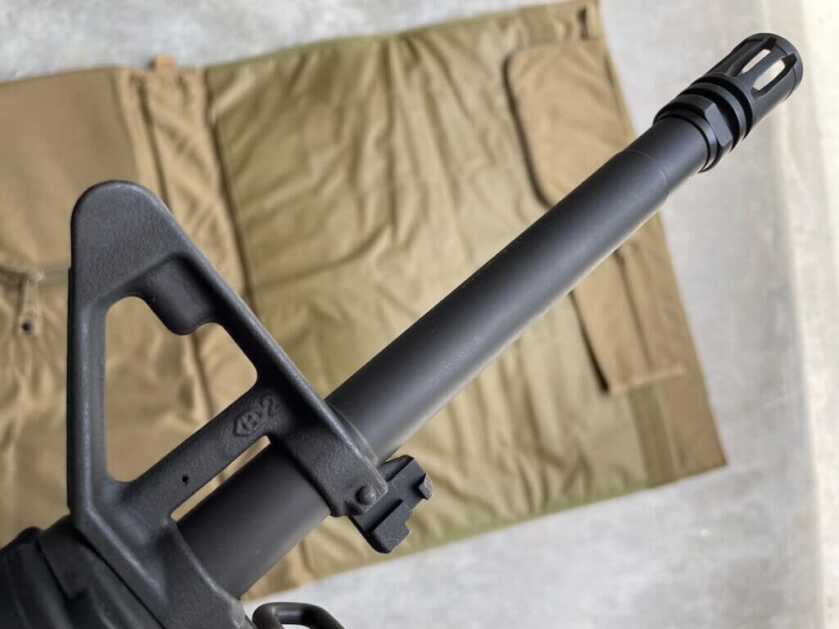
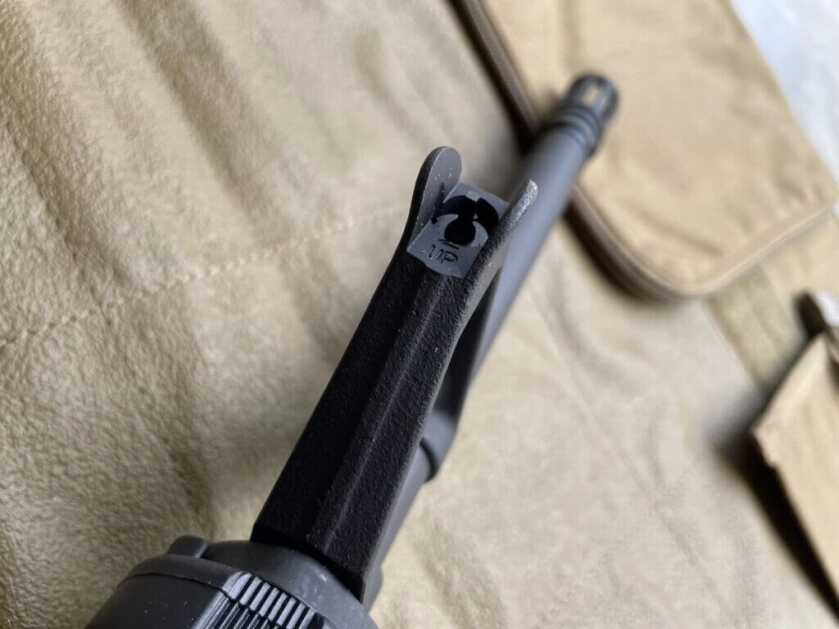
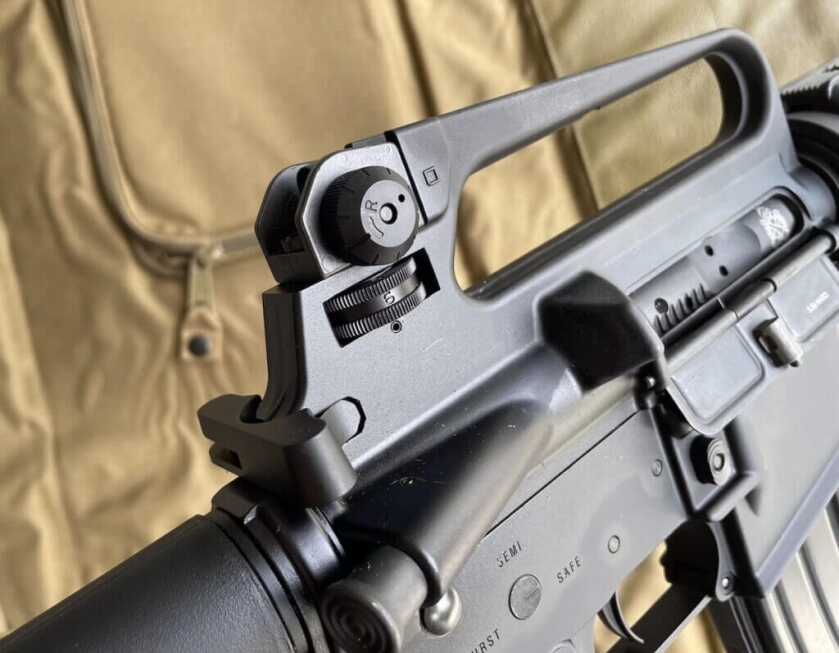
M16A1 Sights vs M16A2 Sights: Perhaps the most distinguishable features of both the M16A1 and the M16A2 is the carry handle on the upper receiver. Not only did the handle allow the rifle to be easily carried, it housed the rear sight. The configuration of the front and rear sight on the M16A2 allows for adjustments to windage and elevation, unlike the earlier M16A1. The rear sight on the M16A2 is fully adjustable with click adjustments for both windage and elevation from 300 to 800 meters. The aperture also has two settings; the small aperture is for daylight shooting, and the large aperture for low-light scenarios. The M16A2 also used a four position adjustable post with a flat face for elevation adjustments. The M16A1 featured a five-setting round post. The M16A1 front sight could create an aberration in certain light causing groups to be off center.
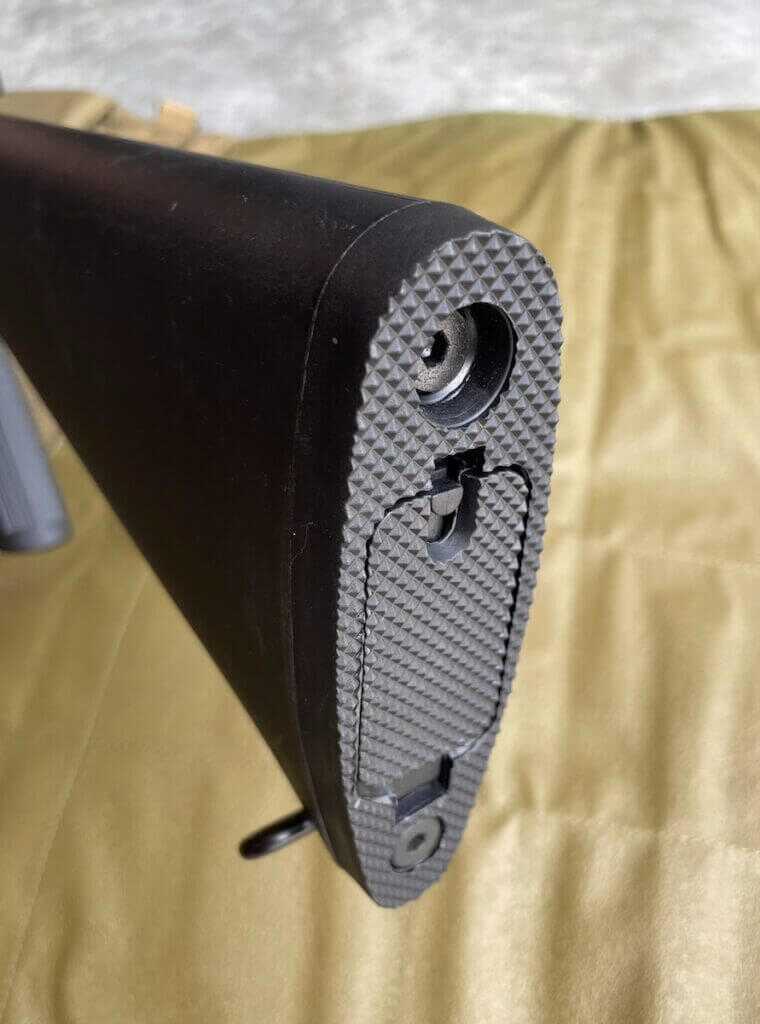
M16A1 Stock vs M16A2 Stock: The length of pull on M16A1 stocks was too short and the relatively smooth butt pad had a reputation for slipping out of your shoulder pocket. They were not very durable either. The M16A2 stock was made of a stronger Zytel-type material that’s a glass filled thermoset polymer and the LOP was lengthened 0.62 inches. The buttplate uses a toothy texture like a meat tenderizer that didn’t slip out of the shoulder pocket.
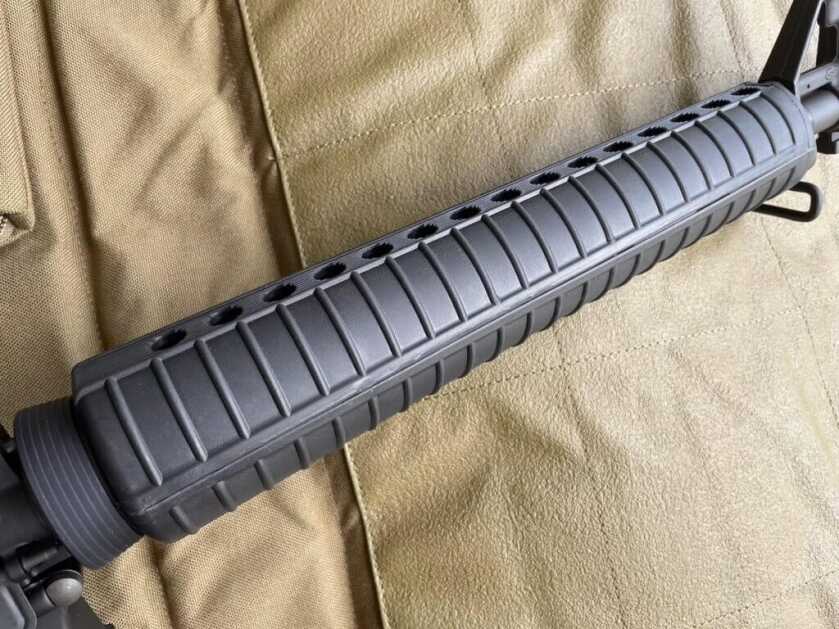
M16A1 Handguard vs M16A2 Handguard: The triangular handguard on the M16A1 used a left and right handguard, which meant both left and right handguards needed to be in stock. The round handguard on the M16A2 was made of a stronger polymer and is symmetrical and can be used for a top or bottom half. A finger hook was incorporated into the A2 pistol grip and designed to keep a user’s hand in place, but in reality it never really worked that well.
M16A1 Selector vs M16A2 Selector: The M16A1 was found to expend, i.e. waste, ammo by the pounds and also made the rifle difficult to aim in full auto. The M16A2 changed to a three-round burst instead of full auto. The selector on the M16A1 read: SAFE-SEMI-AUTO. On the M16A2 it read: SAFE-SEMI-BURST.
M16A1 Gas System Length vs M16A2 Gas System Length: The gas system length remained the same for both the M16A1 and M16A2. They both use a rifle-length gas system, which has less felt recoil and cycles smoother compared to carbine- and mid-length gas systems.
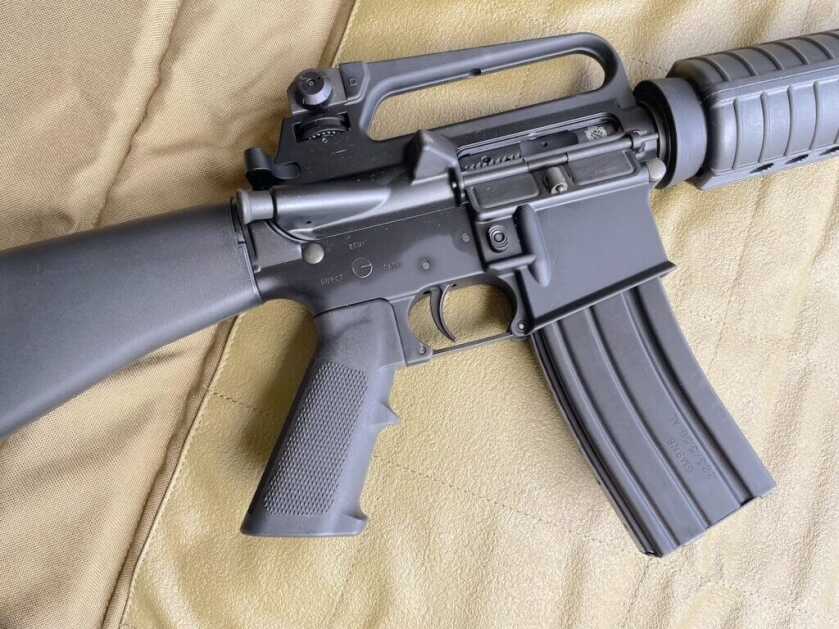
A brass deflector was built into the upper receiver of the M16A2 specifically for left-handed shooters. With the M16A1, hot brass is flung in front of a left-handed shooter’s face. This protrusion ensured the rifle was both right- and left-hand user friendly.
Range Time With the Springfield Armory SA-16A2: Irons, Groups, and Recoil
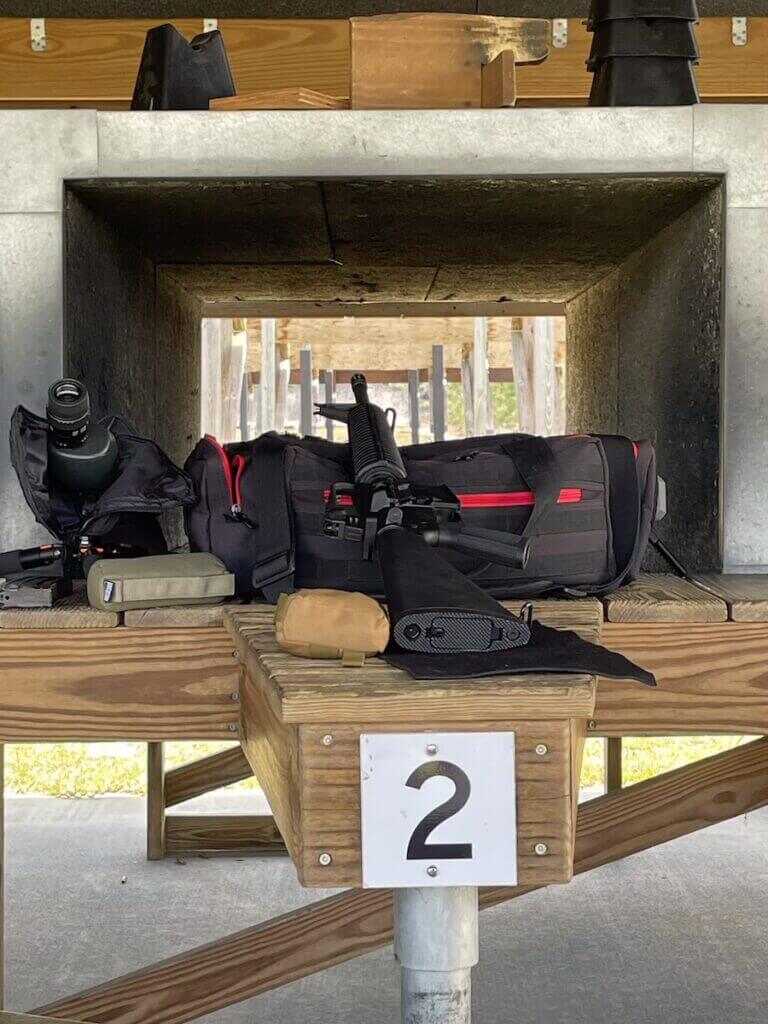
I tested the SA-16A2 with three different bullet weights: 55, 62 and 77 grains. The barrel has a 1:7 inch twist rate so it should play nice with a range of bullet weights. My range bag doubled as a rest and I used a toe bag. I like shooting aperture style sights and found the SA-16A2 easy to shoot. The trigger broke at a consistent 6 pounds, which made me work for my groups.
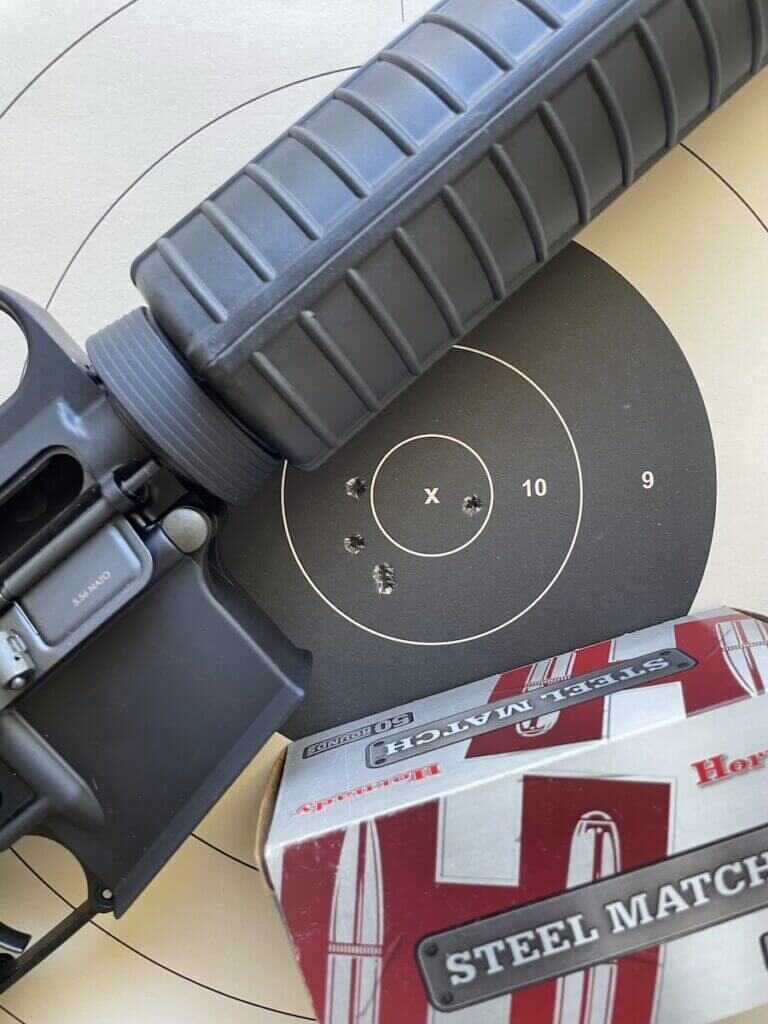
The best 5-shot group at 100 yards was with inexpensive Hornady Steel Match loaded with a 55-grain HP bullet at 1.36 inches; average was 1.66 inches. Second best was Winchester White Box at 1.53 inches and an average of 1.95 inches. This cartridge uses a 62-grain FMJ. With Nosler Match Grade loaded with a 77-grain HPBT my best group measured 1.88 inches and averaged 2.22 inches.
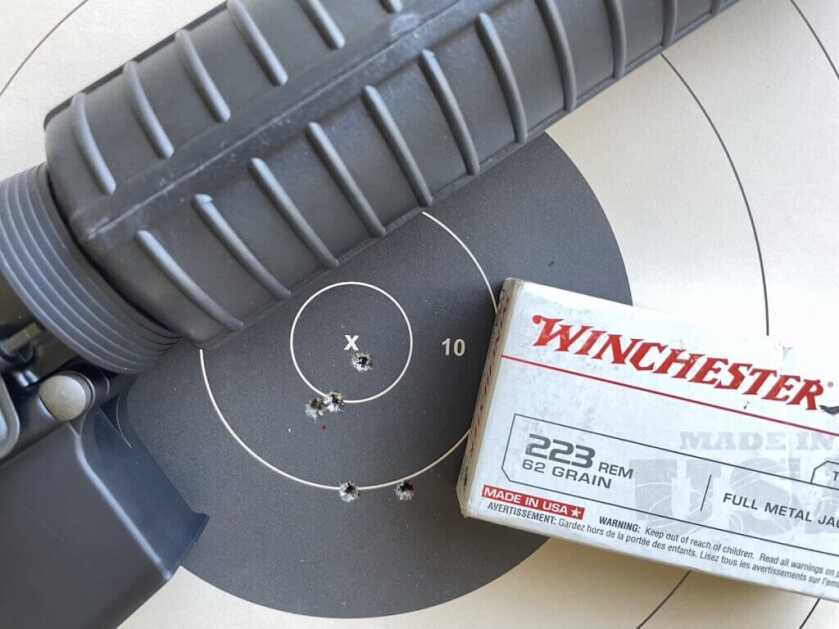
The SA-16A2 definitely has some game to it, and with a lighter trigger I know I could shrink these groups. Recoil was mild with none of that fast slappy cycling of a carbine length gas system. There is a definite difference in recoil even with mid-length gas systems. The two features I missed the most were an oversized charging handle and an ambidextrous selector. I like to flick the selector with my trigger finger and I couldn’t do that with the SA-16A2.

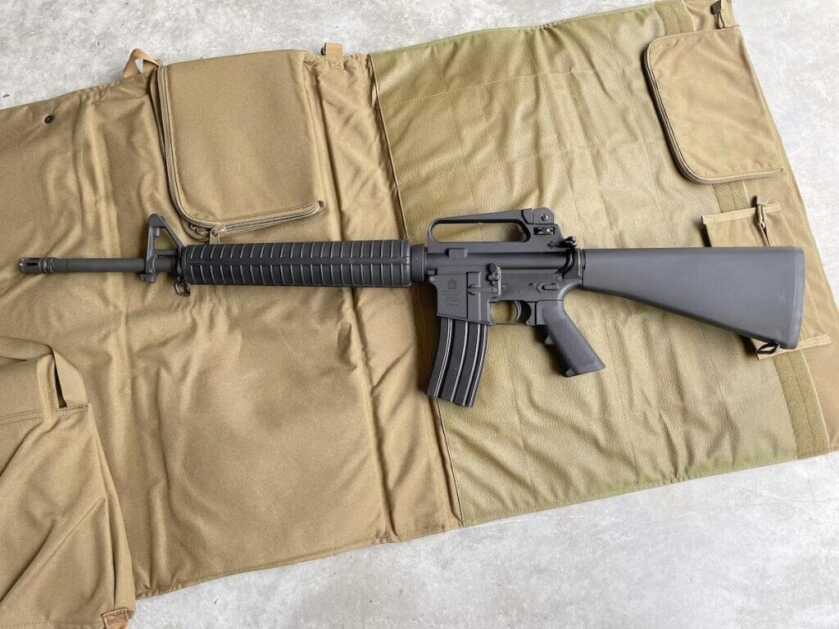
Springfield Armory SA-16A2 Specifications: 5.56 NATO Retro Rifle Details
| Action | Direct impingement, rifle-length |
| Caliber | 5.56 NATO |
| Finish | Matte black |
| Stock | Polymer, fixed |
| Magazine Capacity | 30-round detachable box magazine |
| Sights | Adjustable post front, adjustable aperture rear |
| Barrel Length | 20 in. |
| Overall Length | 39.5 in. |
| Weight | 7.5 lb. |
Springfield Armory SA-16A2 Pros and Cons: Smooth Shooter, Old-School Limits
- Pros: Noticeably mild recoil with rifle-length gas system, comfortable to shoot, smooth cycling, nice accuracy.
- Cons: Long overall length, heavy trigger, lacks easy DIY customization.
Why the M16A2 Legacy Still Matters for AR15 Shooters
Without doubt, the M16A2 variant of the AR15 platform was an improvement in making the AR15 platform more modern. We needed the M16A2 to get to the M4 and to AR15s that are so common today. The SA-16A2 is an old-school ball rifle, and if you want to be knowledgeable about the AR15, it needs to be on your bucket list.

Robert A. Sadowski is an American writer and journalist.
He has written about firearms and 2A issues for decades, and has trained with some of the country’s finest firearm instructors in handguns, rifles/carbines, shotguns and long-range shooting. He has also had the opportunity to interview numerous individuals deeply involved in protecting our 2nd Amendment.
He a is a frequent contributor to numerous gun-enthusiast publications, a few of which include:
- TheArmorylife.com
- TheTruthAboutGuns.com
- GunsAmerica.com
- GunBroker.com
- Gun-Tests.com
- Shooting Illustrated
- SHOT Business
- Gun Digest
Sadowski is also the author of numerous gun books, including: “9MM — Guide to America’s Most Popular Caliber” and “Book Of Glock,” both of which were #1 new releases on Amazon. He also wrote the popular DIY gun book series: Shooter’s Bible Guide to Firearms Assembly, Disassembly, and Cleaning Volume 1 and Volume 2. Other gun books authored by Sadowski include “50 Guns That Changed the World,” and edited “The M16A1 Rifle: Operation and Preventive Maintenance”originally published by the U.S. Department of the Army. He also edits the annual “Gun Trader’s Guide” to firearm values.
Sadowski is also the Treasurer/Secretary of the GLOCK Collectors Association, a non-profit organization with the mission to educate and preserve: Educate the public on the models, variations, and commemoratives built by GLOCK, as well as provide members with information on GLOCK serial numbers, importation, and other facts unique to GLOCK pistols.

