

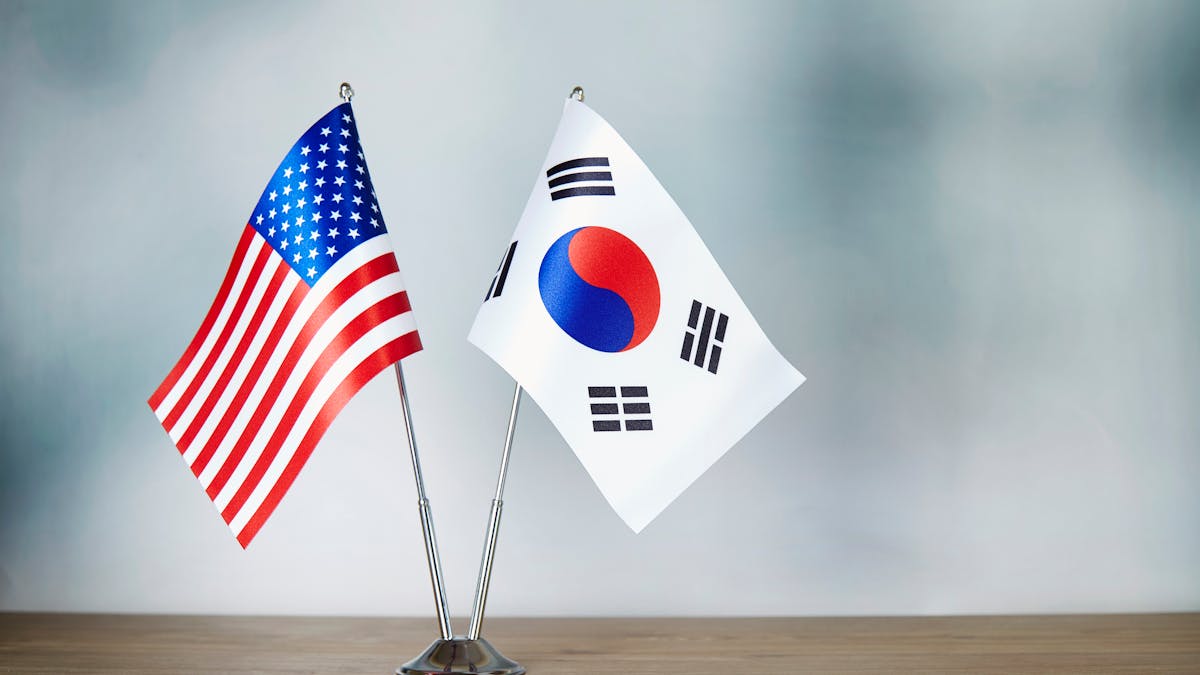
The U.S.-South Korea alliance is one of America’s most important partnerships in the world. For over seven decades, it has kept the peace on the Korean Peninsula, deterred North Korean aggression, and countered Chinese and Russian influence in Northeast Asia. Nearly 28,000 American troops stand shoulder-to-shoulder with South Korean forces in defense of freedom.
The vibrant trilateral security relationship of South Korea, Japan, and the U.S. is a critical backstop to growing security threats in the Asia-Pacific region.
Economically, the U.S.-South Korea relationship is equally vital. American companies invest billions in South Korea, while Korean firms have poured billions into the U.S. — creating tens of thousands of American jobs at Hyundai, Samsung, LG, and SK Hynix plants from Georgia to Texas.
President Donald Trump and President Lee Jae-myung have forged a friendship that has strengthened this alliance at a critical moment. Their direct engagement has produced tangible progress on security cooperation, trade issues, and regional stability. That hard-earned rapport is a valuable asset for both nations.
Even so, recent incidents involving major American companies operating in South Korea risk putting this friendship and the broader partnership under unnecessary strain. Major U.S. technology companies such as Meta, Netflix, Apple, and others have faced discriminatory regulatory scrutiny and actions for years. Over the past six months, Coupang, the Seattle-based NYSE-listed e-commerce giant that has poured billions of dollars of FDI into Korea and created more than 100,000 Korean jobs, has faced threats of severe civil and even criminal penalties following a limited 2025 data breach that has been fully resolved with no risk or damage to customers.
Starbucks Korea is facing similar political theater. In May 2026, a tone-deaf marketing campaign tied to the anniversary of the Gwangju Uprising triggered a firestorm of criticism, boycotts, and government pressure that ultimately forced the local CEO’s resignation. What should have been handled as a corporate messaging misstep became a nationalist crusade, with officials and activists treating a longtime American investor like a political enemy.
While every country has the right and responsibility to enforce its laws, the scale and tone of these episodes have raised legitimate concerns among U.S. investors and policymakers about fairness and consistency. Even Korea’s National Security Adviser, Wi Sung-lac, acknowledged in April that the Coupang dispute is affecting U.S.-Korea security consultations — underscoring how quickly commercial disputes can spill over into the broader alliance.
These cases matter because they erode the confidence and goodwill that underpins the entire U.S.-South Korea relationship. For U.S. companies looking to invest, grow, and compete in Korea — just as Korean companies look to invest, grow, and compete in the U.S. — the perception and reality of a reliable, rules-based political and economic market is critically important and in the interests of Koreans and Americans alike.
While rhetoric and actions among political leaders in both countries have escalated in recent months, there is still an opportunity to defuse these needless disputes.
President Lee has an opportunity to lead by ensuring transparent, non-discriminatory regulation and resolving these matters in a spirit of partnership. By embracing U.S. companies like Coupang and Starbucks — just as the U.S. has embraced Korean companies — President Lee can remove a longstanding and growing irritant in the bilateral relationship and safeguard the alliance that benefits both nations.
The challenges facing the alliance are too serious to allow these internal frictions to fester or grow. North Korea continues to expand its nuclear and missile programs. China’s military modernization and economic coercion grow more assertive. There is no time for the United States and South Korea to let business disputes weaken a partnership that has delivered security and prosperity to both countries for more than 70 years. South Korea should embrace this opportunity and recalibrate its crusade against U.S. firms.
President Lee’s personal friendship with President Trump offers a strong foundation. By addressing these concerns promptly and fairly, he can turn potential friction into further proof that the U.S.-South Korea alliance remains rock-solid. The relationship is too valuable to let it be strained. The time to reinforce it is now.
***
Fred Fleitz served as Chief of Staff of the National Security Council during President Trump’s first term. He spent 25 years in national security positions at the CIA, the Defense Intelligence Agency, the State Department, and on the staff of the House Intelligence Committee. He is author of North Korea, Nuclear Brinkmanship, and the Oval Office, which was just released by Texas A&M Press.

